

A well-maintained lawn starts with accurate measurements. Whether you’re planning to apply fertilizer, spread grass seed, install sod, or control weeds, knowing your lawn’s exact size is essential. This is where a lawn area calculator becomes an invaluable tool.
In this comprehensive guide, you’ll learn everything about calculating lawn area—from basic formulas to advanced mapping techniques—so you can manage your yard efficiently and avoid costly mistakes.
What Is a Lawn Area Calculator?
A lawn area calculator is a tool that helps you determine the total square footage or square meters of your lawn. It can be as simple as a manual formula or as advanced as an online mapping tool that uses satellite imagery.
The purpose of calculating lawn area is to:
- Apply the correct amount of fertilizer
- Determine seed or sod requirements
- Estimate irrigation needs
- Plan landscaping projects
- Avoid over-application of chemicals
Calculate Your Lawn Area
Why Measuring Lawn Area Matters
Many homeowners underestimate or overestimate their lawn size. This leads to several problems:
1. Overuse of Lawn Products
Applying too much fertilizer or herbicide can damage your grass and harm the environment.
2. Under-application
Using too little product results in poor growth, weed issues, and patchy lawns.
3. Wasted Money
Incorrect calculations often lead to buying more products than necessary.
4. Uneven Lawn Care
Different sections of your lawn may require different treatments, which is impossible without accurate measurements.
Common Lawn Shapes and How to Measure Them
Lawns come in different shapes, and each requires a slightly different calculation method.
Rectangle or Square Lawns
This is the easiest type of lawn to measure.
Formula:
Area = Length × WidthExample:
- Length = 20 meters
- Width = 10 meters
- Area = 200 square meters
Circular Lawns
If your lawn is round, you’ll need the radius (distance from center to edge).
Formula:
Area = π × radius²Example:
- Radius = 10 meters
- Area ≈ 3.14 × 100 = 314 square meters
Triangular Lawns
For triangular sections:
Formula:
Area = (Base × Height) ÷ 2Irregular or L-Shaped Lawns
Break the lawn into smaller rectangles or shapes, calculate each area, and add them together.
Pro Tip: Always sketch your lawn on paper before measuring.
Step-by-Step Guide to Measuring Your Lawn
Accurate measurement doesn’t require advanced tools—just a little planning.
Step 1: Divide Your Lawn
Break your lawn into manageable sections based on shape.
Step 2: Measure Dimensions
Use a measuring tape, wheel, or laser measure.
Step 3: Calculate Each Section
Apply the correct formula for each shape.
Step 4: Add All Areas
Combine all sections to get the total lawn size.
Using Online Lawn Area Calculators
Modern tools make lawn measurement easier than ever.
Benefits of Online Calculators:
- Instant results
- No manual math required
- Supports multiple shapes
- Often includes fertilizer estimates
Many calculators also allow:
- Unit conversion (feet ↔ meters)
- Custom lawn shapes
- Input-based calculations
Using Satellite Mapping Tools
Mapping tools provide the most accurate results.
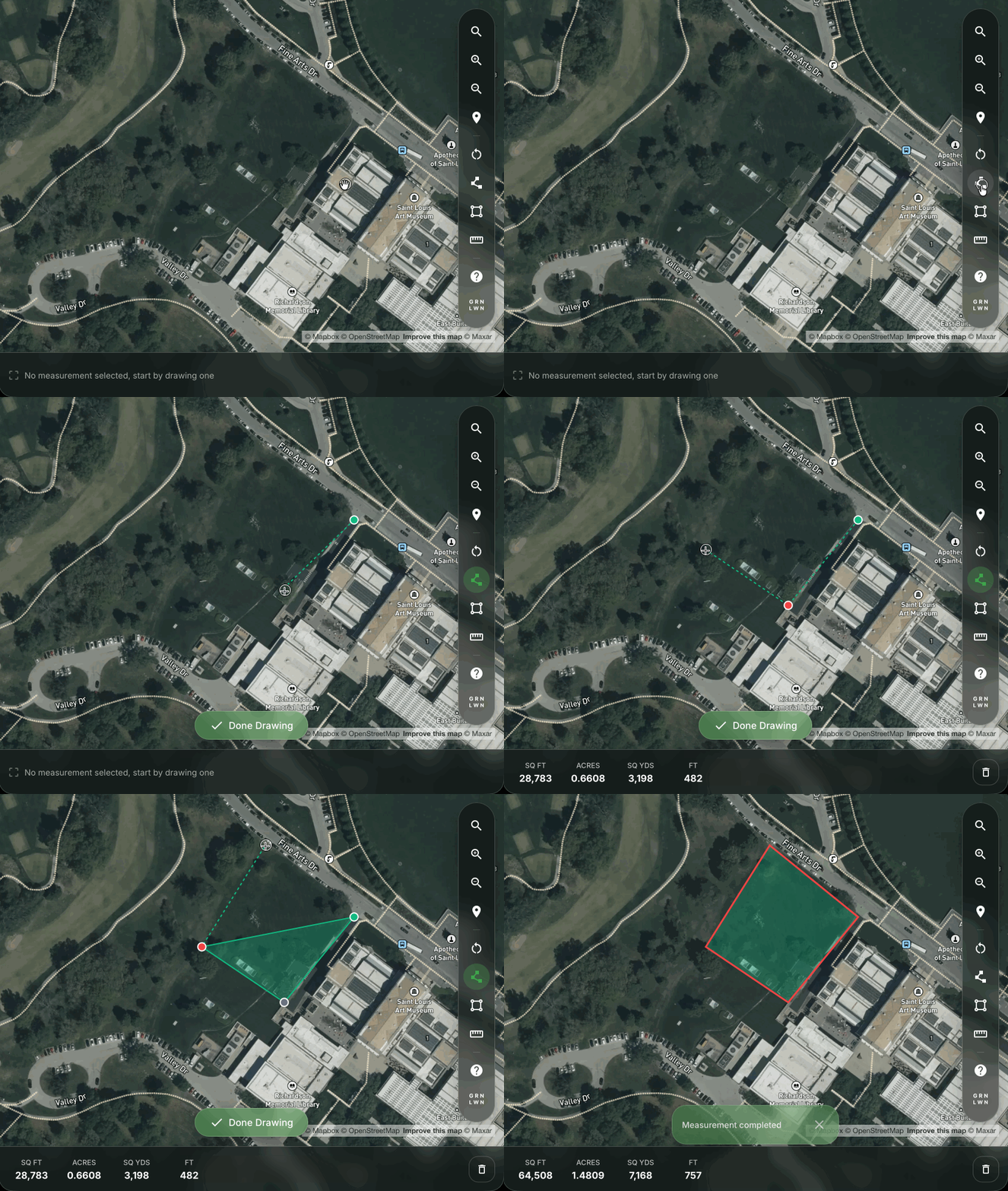
With these tools, you can:
- Search your address
- Draw your lawn boundaries
- Measure exact area automatically
Advantages:
- High accuracy
- Ideal for irregular lawns
- No physical measuring required
Measuring Lawn Sections Separately
Dividing your lawn into zones offers several advantages:
- Helps apply products evenly
- Allows different treatments for different areas
- Improves lawn health
Common Lawn Zones:
- Front yard
- Backyard
- Side yard
- Garden edges
Excluding Non-Lawn Areas
Not every part of your yard needs treatment.
Exclude:
- House footprint
- Driveways
- Patios
- Pools
- Garden beds
Simply measure these areas separately and subtract them from your total lawn size.
Converting Units (Feet vs Meters)
Understanding unit conversion is important:
- 1 square meter = 10.764 square feet
- 1 square foot = 0.093 square meters
Choose the unit based on your region or product instructions.
How Lawn Area Affects Fertilizer Use
Most fertilizers are applied per 1,000 square feet or 100 square meters.
Example:
If your lawn is 2,000 sq ft and the product requires:
- 5 lbs per 1,000 sq ft
You’ll need:
2 × 5 = 10 lbsLawn Area and Grass Seed Calculation
Grass seed requirements depend on grass type.
General Seeding Rates:
- Cool-season grasses: 5–8 lbs per 1,000 sq ft
- Warm-season grasses: 2–4 lbs per 1,000 sq ft
Accurate area ensures proper coverage and healthy growth.
Common Mistakes to Avoid
1. Guessing Lawn Size
Always measure—never estimate.
2. Ignoring Irregular Shapes
Break them into smaller sections.
3. Forgetting to Subtract Structures
Exclude patios, buildings, and driveways.
4. Mixing Units
Stick to one unit system throughout calculations.
Advanced Tips for Accurate Measurement
- Use a measuring wheel for large lawns
- Double-check all measurements
- Use mapping tools for complex layouts
- Save your measurements for future use
Benefits of Using a Lawn Area Calculator
- Saves time
- Improves accuracy
- Reduces waste
- Helps budget better
- Ensures proper lawn care
When Should You Measure Your Lawn?
Measure your lawn:
- Before applying fertilizer
- Before seeding or overseeding
- When planning landscaping
- After making yard changes
DIY vs Digital Lawn Measurement
| Method | Accuracy | Ease | Best For |
|---|---|---|---|
| Manual | Medium | Moderate | Simple lawns |
| Calculator Tool | High | Easy | Most users |
| Mapping Tool | Very High | Very Easy | Complex lawns |
Final Thoughts
A lawn area calculator is one of the most important tools for any homeowner or landscaper. Accurate measurements ensure that you apply the right amount of products, save money, and maintain a healthy, vibrant lawn.
Whether you prefer manual calculations, online tools, or satellite mapping, taking the time to measure your lawn properly will pay off in better results and easier lawn care.
🌱 Calculate Your Lawn Area
FAQs
How do I calculate lawn area quickly?
Use an online lawn calculator or measure length × width for simple shapes.
What is the best tool for measuring lawn size?
Mapping tools provide the highest accuracy, especially for irregular lawns.
Can I measure my lawn using Google Maps?
Yes, you can draw your lawn boundary and calculate the area using satellite tools.
Why is lawn measurement important?
It ensures proper application of fertilizer, seed, and other lawn products.


I’m David man behind Lawn Mowerly; I’ve been dealing with lawnmowers and Tractors with my father since I was a kid. I know every make and model and what each one is capable of and love helping people find the perfect equipment for their needs.