

When it comes to lawn mowing efficiency, the type of grass catcher you use can dramatically impact performance, cleanup time, and overall lawn health. Whether you’re maintaining a residential yard or managing acreage, understanding the difference between cyclonic and standard grass catchers helps you choose the right system for your mower and mowing conditions.
This in-depth guide explores Cyclonic vs Standard Grass Catchers, how each system works, their pros and cons, performance differences, maintenance requirements, cost considerations, and which option is best for different types of users.
What Is a Grass Catcher?
A grass catcher (also called a bagger system) is an attachment that collects grass clippings as you mow. Instead of leaving clippings on the lawn, the catcher stores them in a container or bag for disposal or composting.
Grass catchers are commonly used on:
- Residential walk-behind mowers
- Lawn tractors
- Zero-turn mowers
- Commercial turf equipment
Two primary designs dominate the market:
- Standard (Direct-Flow) Grass Catchers
- Cyclonic (High-Efficiency) Grass Catchers
While they serve the same purpose, their internal airflow mechanics are very different.

How Standard Grass Catchers Work
A standard grass catcher uses a straightforward airflow system. As the mower blade spins, it creates suction that lifts grass clippings and propels them through a discharge chute into a collection bag or container.
Basic Components
- Discharge chute
- Fabric or hard plastic collection bag
- Frame or support structure
- Air vents or mesh panels
The blade’s natural airflow does most of the work. There are no internal chambers to separate air and debris.
Airflow Process
- Blade cuts grass.
- Suction pulls clippings upward.
- Clippings travel directly through chute.
- Debris lands inside bag.
- Air escapes through mesh fabric or vent holes.
Because air and debris move together without separation, airflow efficiency decreases as the bag fills.
How Cyclonic Grass Catchers Works
Cyclonic systems use a turbine-style or blower-assisted airflow design that creates a vortex (cyclone) inside the collection chamber. This spinning airflow separates grass clippings from air before depositing them into the container.
Key Components
- Turbo blower or powered impeller
- Cyclone chamber
- Debris separation housing
- Collection container (often larger capacity)
Airflow Process
- Clippings enter via high-speed blower.
- Air spins rapidly inside chamber.
- Centrifugal force pushes debris outward.
- Air separates and exits through vents.
- Clippings compact efficiently in container.
This design improves packing density and reduces clogging.
Airflow Efficiency Comparison
Airflow is the single most important difference between these systems.
Standard System
- Relies on blade lift only
- Air and debris move together
- Reduced suction as bag fills
- Higher clog risk in wet conditions
Cyclonic System
- Assisted airflow (blower or turbine)
- Separates debris from air
- Maintains suction longer
- Handles damp or heavy grass better
Cyclonic systems generally outperform standard systems in demanding mowing conditions.
Clipping Capacity and Packing Density
One major advantage of cyclonic systems is how tightly they pack clippings.
Standard Catchers
- Looser packing
- Bag fills quickly
- Frequent emptying required
- Air pockets reduce efficiency
Cyclonic Catchers
- Clippings compact tightly
- Higher effective capacity
- Fewer stops to empty
- Better for large properties
For properties over one acre, reduced dumping frequency becomes a major time-saver.
Performance in Wet Grass
Wet grass is a challenge for any mower, but catcher design plays a significant role.
Standard baggers often clog when grass is damp because airflow weakens as moisture accumulates.
Cyclonic systems, especially those with powered impellers, maintain stronger airflow and are less likely to clog.
However, even cyclonic systems can struggle in extremely wet conditions.
Installation and Compatibility
Standard grass catchers are typically simpler and easier to install. Many residential mowers come with compatible rear bag kits.
Cyclonic systems may require:
- Additional mounting brackets
- Powered blower attachments
- Belt-driven mechanisms
- Engine modifications
On some commercial mowers, cyclonic systems are factory-integrated.
Maintenance Requirements
Standard Catchers
- Clean bag fabric regularly
- Check chute for clogs
- Inspect mounting hardware
- Replace worn mesh
Maintenance is straightforward and inexpensive.
Cyclonic Catchers
- Clean cyclone housing
- Inspect blower impeller
- Check belts and pulleys
- Lubricate moving parts (if applicable)
Cyclonic systems require more mechanical upkeep but deliver higher performance.
Durability Comparison
Standard systems usually use:
- Fabric mesh bags
- Lightweight plastic frames
They may wear faster under heavy commercial use.
Cyclonic systems often feature:
- Heavy-duty plastic housings
- Metal impellers
- Reinforced mounting brackets
Commercial-grade cyclonic systems are built for extended use.
Noise Levels
Cyclonic systems with powered blowers can produce additional noise compared to standard baggers.
Standard systems are quieter because they rely solely on blade-generated airflow.
For residential neighborhoods with noise restrictions, this can be a consideration.
Cost Differences
Cost is a major deciding factor.
Standard Grass Catchers
- $200–$600 for most residential setups
- Lower installation cost
- Lower maintenance cost
Cyclonic Grass Catchers
- $800–$2,500+ depending on mower size
- Commercial-grade models higher
- Replacement parts more expensive
For small lawns, the price difference may not justify the upgrade.
Lawn Health Considerations
Collecting clippings removes organic matter that would otherwise decompose and return nutrients to soil.
Cyclonic systems often encourage full-season bagging because of their efficiency, which may require additional fertilization to compensate for nutrient removal.
Standard systems are often used seasonally (fall leaf cleanup, first spring cut).
Ideal Use Cases
Best Applications for Standard Catchers
- Small to medium lawns
- Dry mowing conditions
- Budget-conscious homeowners
- Occasional leaf cleanup
Best Applications for Cyclonic Catchers
- Large properties
- Commercial landscaping
- Wet or heavy grass
- High-volume mowing
- Fall leaf management
Professional landscapers often prefer cyclonic systems due to reduced downtime.
Leaf Collection Performance
Cyclonic systems excel at leaf collection because:
- Strong airflow lifts heavy debris
- Leaves compact efficiently
- Less clogging in damp fall conditions
Standard baggers can handle dry leaves but struggle with wet leaf piles.
Commercial vs Residential Perspectives
Commercial landscapers prioritize:
- Time efficiency
- Reduced dumping stops
- Reliability in varied conditions
Homeowners prioritize:
- Lower cost
- Simpler maintenance
- Adequate performance for smaller lawns
The scale of operation strongly influences which system makes sense.
Energy and Fuel Consumption
Cyclonic systems with powered impellers draw additional power from the mower engine. This may:
- Slightly increase fuel consumption
- Add engine strain
- Require higher horsepower
Standard systems have minimal impact on engine load.
Environmental Impact
Bagging removes clippings that would otherwise decompose naturally. While useful for aesthetics and weed control, consistent bagging:
- Reduces soil organic matter
- Requires disposal management
- May increase fertilizer dependency
Mulching remains the most environmentally sustainable mowing method.
Weight and Maneuverability
Cyclonic systems are heavier and may:
- Reduce maneuverability
- Add rear weight
- Affect balance on slopes
Standard catchers are lighter and easier to remove.
Common Problems and Troubleshooting
Standard Catcher Issues
- Clogged chute
- Poor airflow
- Bag overfilling
- Torn mesh
Cyclonic System Issues
- Impeller damage
- Belt wear
- Housing cracks
- Increased vibration
Proper cleaning after each use greatly extends lifespan for both systems.
Long-Term Ownership Costs
Over five years:
- Standard systems cost less upfront and in maintenance
- Cyclonic systems may save time but cost more in parts and fuel
For professionals billing by the job, time savings may offset higher cost.
Decision Checklist
Choose a standard catcher if:
- Lawn under one acre
- Mostly dry conditions
- Limited budget
- Minimal debris
Choose a cyclonic catcher if:
- Lawn over one acre
- Heavy leaf fall
- Wet or thick grass
- Commercial use
Here’s a clear, side-by-side Cyclonic vs. Standard Grass Catchers comparison table you can use for quick reference.
Cyclonic vs. Standard Grass Catchers Comparison Table
| Feature | Cyclonic Grass Catcher | Standard Grass Catcher |
|---|---|---|
| Airflow System | Uses high-speed blower or turbine to create a vortex (cyclone effect) | Relies on mower blade suction only |
| Clipping Separation | Separates air from debris before collection | Air and clippings travel together into bag |
| Packing Density | Packs clippings tightly (higher capacity per dump) | Looser packing; fills faster |
| Clog Resistance | Less prone to clogging, even in damp grass | More likely to clog in wet or heavy grass |
| Performance in Wet Grass | Performs better due to strong airflow | Often struggles and clogs |
| Best For | Large lawns, commercial use, heavy leaf cleanup | Small to medium residential lawns |
| Leaf Collection | Excellent — strong suction and compaction | Good for dry leaves; weaker with wet leaves |
| Installation Complexity | More complex; may require blower attachment and belts | Simple bolt-on or rear bag setup |
| Weight | Heavier system | Lighter overall |
| Engine Power Requirement | Requires more horsepower | Minimal impact on engine load |
| Fuel Consumption | Slightly higher (due to blower) | Lower fuel impact |
| Noise Level | Louder (blower/turbine sound) | Quieter |
| Maintenance Needs | Higher (blower, belts, impeller cleaning) | Low (bag cleaning, chute clearing) |
| Durability | Often heavy-duty, commercial-grade | Typically lighter-duty materials |
| Initial Cost | $800–$2,500+ depending on mower type | $200–$600 typical residential range |
| Long-Term Value | Saves time on large properties | Budget-friendly for average lawns |
| Dump Frequency | Fewer stops due to tighter compaction | More frequent emptying required |
| Ideal User | Landscapers, large-acreage owners | Homeowners with standard yard size |
Quick Summary
Choose Cyclonic If:
- You mow over 1 acre
- You deal with heavy leaf fall
- You mow thick or damp grass
- You want fewer dumping stops
Choose Standard If:
- Lawn is under 1 acre
- You mow mostly dry grass
- Budget is a priority
- You prefer simpler maintenance

- Grass catcher for attachment to the StaySharp Max lawnmower, For automatic grass collection during mowing
- Practical: large 18-litre bin
- Easy installation without tools on the front of the mower, Convenient handle for easy tray handling
- High strength due to high-Steel frame, Finnish design
- Contents: 1x Fiskars StaySharp Grass Catcher, Dimensions (HxLxD): 54.5 x 55 x 6 cm, Weight: 1900 g, Colour: Black/Orange, 1000592

- Grass catcher that is specially made for American Lawn Mower 14-Inch and 16-Inch reel lawn mowers; Models 1204-14, 1304-14, and 1415-16
- Reel mower bag to collect leaves and grasses to prevent it from being strewn across your lawn
- Push mower grass catcher made of high-quality and durable materials; Plastic bottom, rot-resistant polyester fabric, and heavy-duty wireframe
- Lawn mower grass catcher with belt and quick release clutch for a perfect fit to the reel
- Includes a detailed instruction manual for quick and easy grass catcher assembly

- 18-Inch/20-Inch reel mower grass catcher is made in China.
- 18-Inch/20-Inch reel mower grass catcher for reel mower can collect leaves and grass scattered on the lawn.
- Grass catcher for push mower is composed of the bottom of the plastic, anticorrosive polyester fiber fabric and heavy wire frame, and the material is high -quality and durable.
- 18-Inch/20-Inch reel mower grass catcher with a belt and a fast release clutch, which can quickly and easily assemble the grass suction.
- Please watch the installation video.
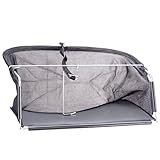
- Grass catcher that is specially made for American Lawn Mower 18-Inch and 20-Inch reel lawn mowers; Model 1815-18
- Reel mower bag to collect leaves and grasses to prevent it from being strewn across your lawn
- Push mower grass catcher made of high-quality and durable materials; Plastic bottom, rot-resistant polyester fabric, and heavy-duty wireframe
- Lawn mower grass catcher with belt and quick release clutch for a perfect fit to the reel
- Includes a detailed instruction manual for quick and easy grass catcher assembly
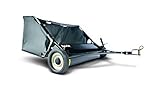
- MADE IN USA
- SWEEPER WIDTH: 42-Inch width
- BRUSH HEIGHT: Set brushes to penetrate the grass to a depth of 1/2 in. (13 mm)
- HOPPER SIZE: 12 cu. Ft. Capacity
- WHEELS: 11″ x 2.5″ semi pneumatic wheels
Final Verdict
Cyclonic and standard grass catchers both serve important roles in lawn maintenance.
Standard catchers are affordable, simple, and ideal for average residential mowing.
Cyclonic systems offer superior airflow, improved packing density, better performance in heavy or wet conditions, and reduced downtime — making them ideal for large properties and professional use.
The right choice depends on:
- Lawn size
- Mowing frequency
- Grass type
- Budget
- Desired efficiency
If you mow occasionally on a small property, a standard system is more than adequate.
If you manage large areas or mow commercially, the investment in a cyclonic system can pay off in productivity and reduced frustration.


I’m David man behind Lawn Mowerly; I’ve been dealing with lawnmowers and Tractors with my father since I was a kid. I know every make and model and what each one is capable of and love helping people find the perfect equipment for their needs.